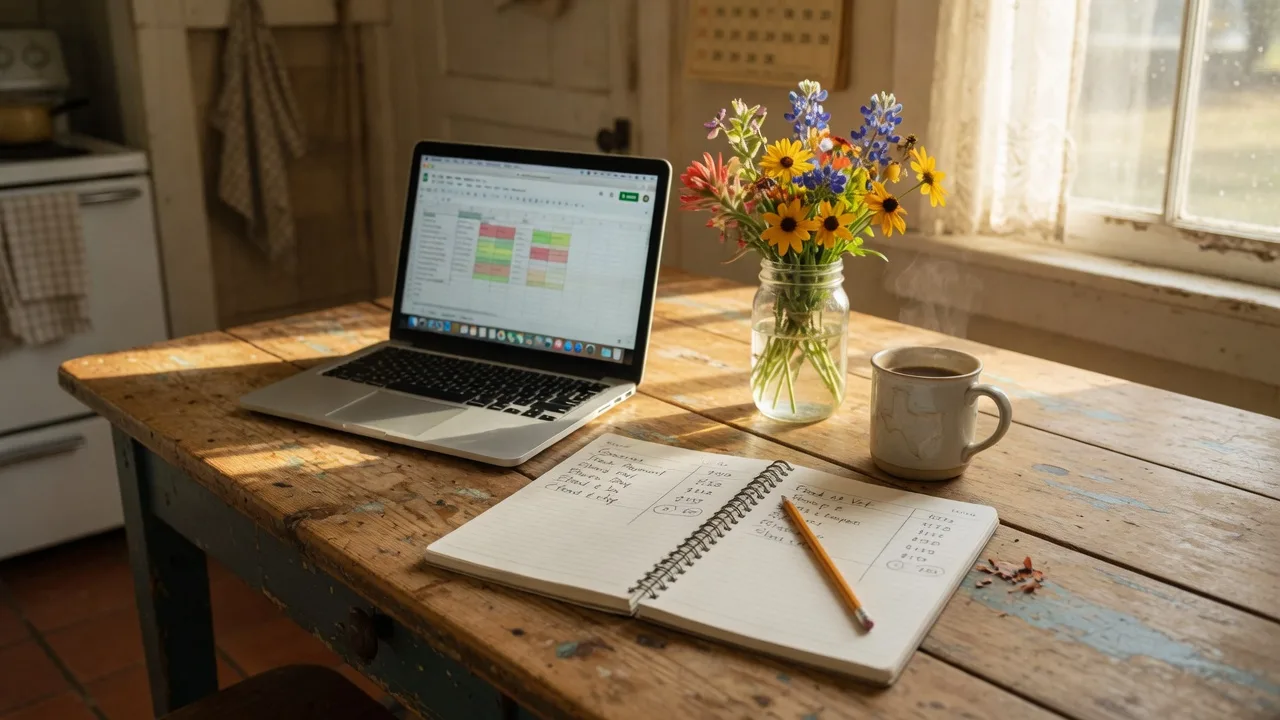
"How much home can I afford?" is the first question almost every buyer asks, and it deserves a straight answer. Affordability is not a magic number. It is a math problem with four inputs, and once you understand them you can see exactly where you stand before you ever walk into a lender's office or a seller's open house. The good news for Brenham buyers is that this still a relatively affordable market. The current median sale price sits well below the Texas averages for metro areas, which means a solid starter budget goes further here than in many parts of the state.
My name is De Wayne Mortensen II. I am a REALTOR® with Better Homes and Gardens Real Estate Hometown in Brenham, licensed in Texas (836279) and California (01749107), with more than 20 years helping buyers across Washington County and South Central Texas. I have worked with first-time buyers, VA and FHA borrowers, cash buyers, and investors, and I have seen this exact budget math play out in hundreds of transactions. Let me walk you through what affordability really means in Brenham in 2026, with real local numbers you can use today.
What Does "Affordable" Really Mean?
Lenders do not decide what you can afford; they decide what they will lend. The distinction matters. A lender approves a loan amount based on your income, your debts, your credit, and a set of standard ratios. Whether that payment fits your life, your savings goals, and your comfort level is a decision only you can make. I tell every buyer the same thing: the number the bank approves is the ceiling, not the target.
Your monthly payment is more than the loan. It is typically made up of four parts, known by the acronym PITI: principal (paying down the loan), interest (the cost of borrowing), taxes (property taxes paid through escrow), and insurance (homeowners insurance, also paid through escrow). If you put down less than 20 percent on a conventional loan, add private mortgage insurance, or PMI, to the list. FHA loans carry a similar mortgage insurance premium. In Texas, taxes and insurance are not small rounding errors, they are a big part of the monthly bill, which is why so many out-of-state buyers underestimate the real payment.
The Four Numbers That Set Your Budget
Before any calculator can give you a number, you need four inputs. They work together, and changing any one of them changes what you can afford.
Your gross income. This is your income before taxes, from all earners on the loan. It sets the ceiling on how large a payment you can qualify for.
Your monthly debts. Car payments, student loans, credit card minimums, child support, and other recurring obligations all count. Lenders measure your total debt against your income with the debt-to-income ratio, or DTI.
Your down payment. The more you put down, the smaller the loan, the lower the payment, and the better your rate. Your down payment also decides whether you pay PMI.
Today's mortgage rate. At 7.5 percent, a 30-year fixed loan costs more per month than the same loan at 6 percent, and the rate you lock is the single biggest factor you cannot fully control. Rates change, which is why affordability has shifted so much in 2026.
Lenders commonly use a front-end ratio of about 28 percent of gross income for the housing payment, and a back-end ratio of 36 to 43 percent for all debts including the housing payment. FHA is more flexible on the back end, and VA is more flexible still. These are guidelines, not laws, but they are the framework every loan approval is built on. For a complete look at credit scores, DTI, and pre-approval preparation, see my guide to what first-time buyers should know before applying for a mortgage in Texas.
What Do Homes Cost in Brenham Right Now?
The most recent market data puts the median sale price of a Brenham home at about $269,000 for the three months ending September 2026, roughly flat compared with a year earlier. Earlier in 2026, the Washington County median ran around $298,000. Home prices in the county range widely, from entry-level homes in the low $200,000s to acreage, new construction, and rural properties well above $1 million, so the median is a starting point, not a prediction of what you personally will pay.
Your property taxes vary by address but typically run about 1.17 percent of value in the county and roughly 1.26 percent inside Brenham city limits, before exemptions. Texas homeowners insurance averages about $4,500 to $4,650 a year statewide in 2026. I explain both in detail in my property tax guide and my homeowners insurance guide, and both numbers go into the examples below.
The Payment Math: Three Real Scenarios
Here is how the math works out for typical Brenham buyers in fall 2026. The examples use a 30-year fixed rate of 7.5 percent, near where Texas buyers were being quoted in mid-October, property taxes of 1.26 percent (inside Brenham city limits), and homeowners insurance of about $4,560 a year, the middle of the Texas average. They also assume no other monthly debts. Every loan is different, so treat these as planning numbers, not quotes, and always confirm the real figures with a lender.
Scenario 1: Conventional Loan, 20 Percent Down
On the median-priced Brenham home at $269,000, a 20 percent down payment is $53,800, leaving a loan of $215,200. At 7.5 percent, the principal and interest payment is about $1,505 a month. Add roughly $282 a month for property taxes and about $380 a month for insurance, and the total payment lands near $2,170 a month. With 20 percent down there is no PMI. Using the 28 percent front-end guideline, that payment calls for a gross income of about $93,000 a year.
Scenario 2: FHA Loan, 3.5 Percent Down
For a buyer with less saved, an FHA loan on a $250,000 home uses a 3.5 percent down payment of $8,750. The loan, including the financed upfront mortgage insurance premium, works out to roughly $245,000, and the principal and interest payment is about $1,717 a month. FHA also carries an annual mortgage insurance premium of about $111 a month. Add property taxes of about $262 a month and insurance of about $380 a month, and the total is near $2,470 a month. That points to a gross income around $106,000 a year under the same 28 percent guideline. Lower down payment options mean a higher payment, and the trade-off deserves an honest look before you choose a loan program.
Scenario 3: VA Loan, Zero Down
Eligible veterans and active-duty service members can buy with no down payment and no PMI. On a $320,000 home, the principal and interest payment at 7.5 percent is about $2,237 a month. Add roughly $336 a month for taxes and about $400 a month for insurance, and the total is about $2,973 a month, which suggests a gross income around $127,000 a year under the 28 percent guideline. VA loans do carry a funding fee on most first uses, though veterans with a service-connected disability are exempt, and the fee can be rolled into the loan. I cover the details in my guide to using a VA loan more than once.
Notice the pattern: the less you put down, the larger the loan, and the more income you need to carry it at today's rates. That is the real trade-off of a low down payment in a 7 percent rate environment, and it is exactly why the down payment conversation deserves more than a "just save 20 percent" sound bite.
What the 2026 Rate Move Means for Buyers
Mortgage rates are the biggest reason affordability headlines keep changing. Rates on a 30-year fixed loan started 2026 near 6 percent, drifted to about 6.5 to 6.7 percent in midsummer, crossed 7 percent in late September for the first time in about two years, and were running roughly 7.2 to 7.5 percent across Texas in mid-October. That is a meaningful jump in a single year, and it changes the monthly payment on the same house by hundreds of dollars.
For buyers, the practical results are a smaller purchasing power at the same payment, and more value placed on rate moves during your transaction. A 2-1 buydown or seller-paid points can lower your first years' payment, and seller concessions can cover some of your closing costs in a balanced market. I walk through the buydown math in my guide to mortgage points and rate buydowns, and the rules around seller concessions in my guide to seller concessions and buyer-agent compensation. How rates affect pricing and strategy across the county is the subject of my full article on rates and home buying in 2026.
Down Payment Options for Brenham Buyers
"Can I buy with little or no down payment?" is one of the questions I hear most, and in Brenham the answer is often yes. Here is the menu most Washington County buyers choose from:
Conventional loans. As little as 3 to 5 percent down with good credit, though you pay PMI below 20 percent down. Some first-time buyers in Texas can pair a conventional loan with down payment assistance.
FHA loans. 3.5 percent down with a credit score of 580 or higher, and 10 percent down below that. FHA is popular with first-time buyers but carries an upfront and annual mortgage insurance premium.
VA loans. Zero down for eligible veterans, service members, and surviving spouses, with no PMI and flexible credit and DTI guidelines. This is the strongest program available to those who qualify.
USDA loans. Zero down in most of Washington County, which sits inside the USDA rural eligibility map, with below-market mortgage insurance. The program has income limits. I explain eligibility in my guide to USDA loans in Washington County.
Down payment assistance. Texas offers several state and local programs for first-time and qualifying buyers, and I break them down in my guide to down payment assistance in Brenham.
What Lenders Check Before They Say Yes
Your pre-approval letter comes with a look at four things, and it helps to know about them before you apply:
Credit score. Higher scores unlock better rates and lower mortgage insurance. In a 7 percent market, even a half-point better rate is worth thousands over the life of the loan, so it pays to check your credit report and correct errors before you apply.
Income and employment. Lenders want a stable two-year history in your line of work. Salaried and hourly income, bonus income, and self-employment each get verified differently.
Debt-to-income ratio. As noted, most lenders want your total monthly debts, including the new housing payment, at 43 percent of gross income or below, and some programs bend that limit.
Assets and reserves. You need the down payment and closing costs in an account with a documented source, and many lenders want a few months of reserves after closing.
The order matters: a pre-approval before you shop tells you your real number, makes your offer stronger, and keeps you from falling in love with a home outside your range. I walk through the whole preparation checklist in my mortgage preparation guide.
Smart Ways to Stretch Your Budget
If the first pass at the math feels tight, you have more levers than "make more money." Here are the ones Brenham buyers actually use:
Ask about seller concessions. In a balanced market, sellers frequently contribute toward your closing costs or prepaids, which lowers the cash you need at closing without touching the price much. See my guide to seller concessions.
Consider a rate buydown. A 2-1 buydown lowers your payment for the first two years, which can bridge an affordability gap while your income grows. The builder or seller sometimes pays for it on new construction.
Look outside city limits. Homes in the county around Brenham, including Burton, Chappell Hill, and Independence, often come with a slightly lower price and a lower tax rate than in-town properties, in exchange for a commute and usually well or septic systems. The trade-offs are covered in my guide to where to live in Washington County and my wells and septic guide.
Use the right loan program. VA and USDA buyers can carry a zero down payment, which is the single biggest lever available to the buyers who qualify.
Lower your other debts first. Paying off a car or credit card before you apply can shrink your DTI enough to raise your approval amount, or it can free up room in the same payment. This is often the fastest fix of all.
Common Budgeting Mistakes to Avoid
Over twenty years, I have watched buyers make the same handful of mistakes. They are easy to avoid once you know what they are:
Ignoring taxes and insurance. Out-of-state calculators often underestimate Texas property taxes and insurance, which together can add $600 or more a month to a payment. Use the local numbers, not the national defaults.
Forgetting closing costs and inspections. Beyond the down payment, you will pay closing costs (often 2 to 5 percent of the price in Texas, with the split depending on the contract), an appraisal, and inspections. I lay out the full picture in my closing costs guide.
Maxing out the approval. Being approved for a $400,000 loan does not mean a $400,000 house is the right call. Most buyers, honestly, are happiest leaving some margin for life: repairs, furniture, kids, retirement.
Skipping the pre-approval until too late. A pre-approval tells you your real range before you shop, and it signals to sellers that you can close. Show up with one and you shop with a completely different level of confidence.
Ignoring rural property costs. If you are buying acreage in Washington County, budget beyond the mortgage for well and septic maintenance, and for a separate well water test and septic inspection before closing. Those are not covered by a standard home inspection, and they can carry real costs.
Should You Wait for Rates to Drop?
This is the question on every buyer's mind in a year like this, and the honest answer is that nobody knows. Rates have moved up sharply in 2026, and some forecasts expect them to ease later, but forecasts have been wrong before, and prices do not necessarily fall when rates do. What I can tell you from experience is that waiting has a real cost: prices in Brenham have largely held steady, rents keep rising, and every month you rent is a month you do not build equity. Plenty of buyers who waited for "the right time" in past years ended up paying more later.
The more useful question is whether you can afford the payment today without stretching yourself past comfort. If you can, buying now and refinancing later if rates fall is a proven strategy, and it is how many successful homeowners got started. If the numbers are genuinely too tight, then the plan is not to wait in place, it is to work the levers above, pay down debt, build your down payment, and improve your credit so you are ready when the numbers do work. Either way, the decision belongs to you, and my job is to give you the information to make it well. The step-by-step version of the whole process is in my guide to buying a home in Brenham.
Common Questions About Affordability
What percentage of my income should go to a mortgage?
Lenders commonly use about 28 percent of gross income as the guideline for the housing payment, and 36 to 43 percent for all debts including housing. Your own comfortable number may be lower, and it is worth setting it before a lender tells you their maximum.
Can I buy a home in Brenham with little or no down payment?
Yes. FHA loans start at 3.5 percent down, most of Washington County qualifies for zero-down USDA financing, and eligible veterans can use a zero-down VA loan. Texas down payment assistance programs can also help qualified first-time buyers. The trade-off is a larger loan and a higher monthly payment at today's rates, so the low down payment is only part of the decision.
What is the median home price in Brenham right now?
The most recent figures put the median sale price of a Brenham home at about $269,000 for the three months ending September 2026, roughly flat year over year. Washington County's median ran around $298,000 earlier in 2026. Prices vary widely by property type, with entry homes in the low $200,000s and acreage and new construction ranging well above that.
How much do I need to make to buy a house in Brenham?
With 20 percent down and no other debts, a gross income of about $90,000 to $95,000 a year typically supports a home at the current median price. With a 3.5 percent down FHA loan, plan on closer to $106,000, and zero-down buyers usually need more still. Every situation differs, and a lender can calculate your exact number from your income, debts, and credit.
Do closing costs count toward what I can afford?
Yes, and buyers often forget them. Closing costs in Texas typically run 2 to 5 percent of the price depending on your contract, and they come due on top of your down payment. You also pay for the appraisal and inspections out of pocket. Budgeting for those before you make an offer is part of affordability, and my closing costs guide gives you the full list.
The Bottom Line
How much home you can afford in Brenham comes down to four numbers: your income, your monthly debts, your down payment, and today's rate. With the median home near $269,000 and rates near 7.4 percent, a typical buyer with 20 percent down needs a gross income around $90,000 to $95,000 a year, while low and zero down payment buyers usually need more. The market here remains more affordable than most Texas metros, and the levers to improve your number, from down payment assistance to seller concessions to the right loan program, are real and available.
If you are ready to find out your real number, I would be glad to connect you with a trusted local lender, help you compare loan programs, and show you what homes in your range actually look like in Brenham and Washington County. With more than 20 years in real estate, I have helped buyers at every point on this spectrum, and I will give you honest guidance on what works for your situation. There is usually more than one way to solve a real estate problem, and finding yours starts with an honest conversation. Reach out anytime. Glad to help.