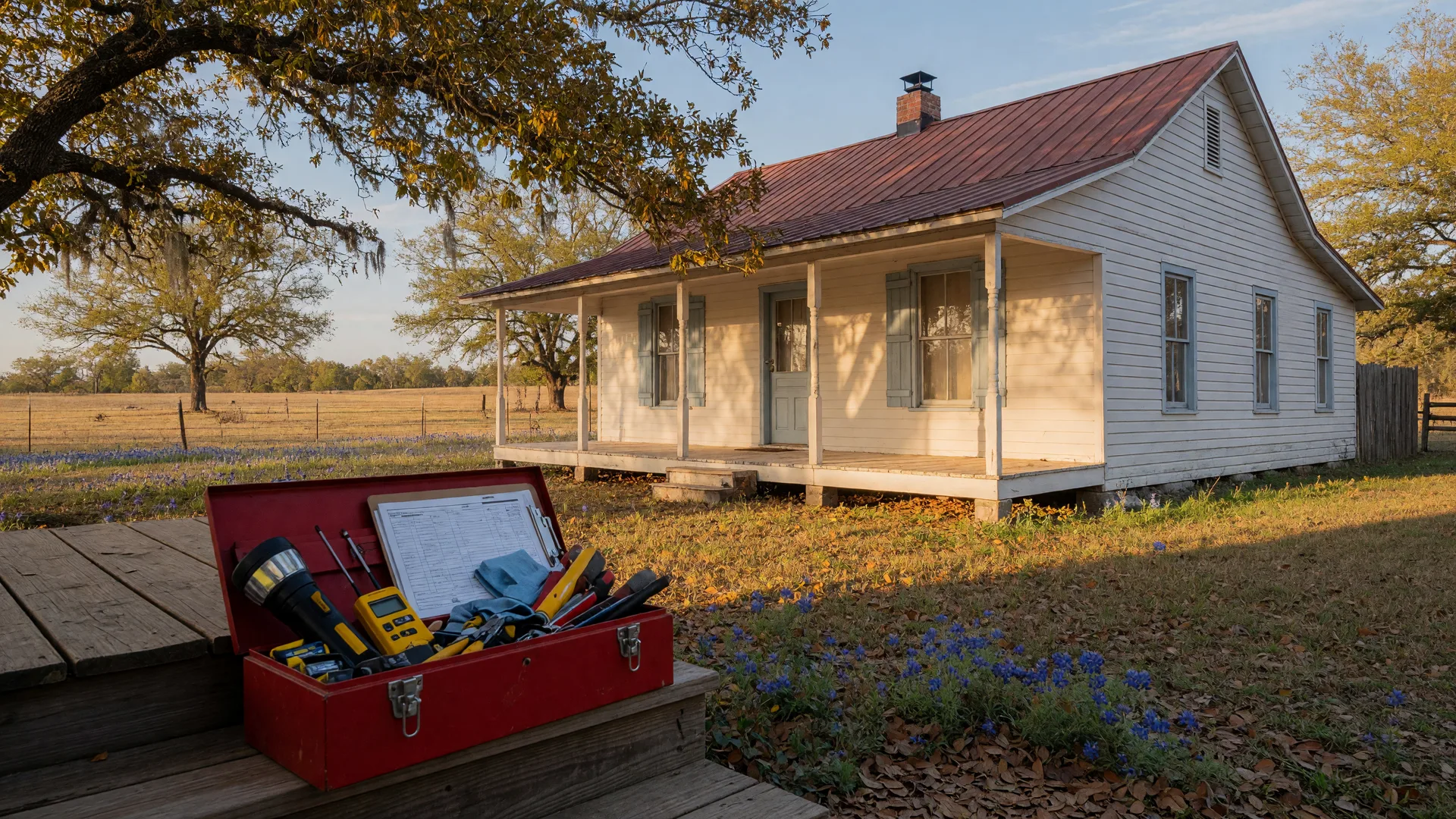
A home inspection is the single most valuable step a buyer takes between having an offer accepted and closing. It is your look under the hood. It will not tell you if a house is a good buy, but it will tell you what is working, what is worn, and what may need attention soon, so you can make an informed decision with your eyes open. The inspection report is the document that turns "I love this house" into "I understand this house," and that understanding is what protects you.
My name is De Wayne Mortensen II. I am a REALTOR® with Better Homes and Gardens Real Estate Hometown in Brenham, licensed in Texas (836279) and California (01749107), with more than 20 years helping buyers and sellers across Washington County and South Central Texas. I have been through thousands of inspections, negotiated thousands of repair requests, and I have seen what happens when buyers skip this step or misunderstand what the report is telling them. Let me walk you through exactly what a Texas home inspection covers, so you know what to expect on inspection day.
What Is a Home Inspection in Texas?
A home inspection is a limited, visual examination of a home's accessible systems and components, performed by a licensed professional to identify conditions that are unsafe or in need of repair. In Texas, inspections are governed by the Texas Real Estate Commission (TREC) and its Real Estate Inspector Standards of Practice, which set the minimum requirements for every licensed inspector in the state. That means when you hire a licensed Texas inspector, you are getting a consistent, state-regulated baseline of what must be checked and reported.
The inspection itself is not an engineering evaluation and it is not a guarantee. It is a visual, non-invasive survey using normal operating controls. The inspector looks at what can be seen and reached safely, operates the systems in their normal manner, and reports on their condition. If a problem is hidden behind a wall, buried in the ground, or otherwise concealed, a standard inspection will not find it. That limitation matters on rural properties, which I will come back to below.
What Does a TREC-Licensed Inspector Check?
Under the TREC Standards of Practice, a licensed inspector must visually inspect and report on the following accessible systems. On a typical Brenham or Washington County home, expect the inspection to cover all of these:
Structural Components
The inspector checks the foundation, the framing, the walls, the floors, and the ceiling structure for signs of movement, settlement, cracking, or rot. On Texas slab foundations, that includes looking for cracking, unevenness, and evidence of moisture. Because many Washington County homes sit on pier-and-beam or slab foundations over expansive clay soils, the foundation is often the first thing a buyer wants to understand, and the inspector gives you the baseline.
Roof Covering and Drainage
The inspector examines the roof covering, flashing, gutters, and downspouts, looking for missing or worn shingles, signs of leakage, and poor drainage. They also report on the condition of skylights, chimneys, and other roof penetrations. On an older home in Brenham, roof age and condition are common negotiating points, and a good inspection report tells you whether the roof has years left or needs attention soon.
Plumbing
The inspector checks visible plumbing: the water heater, the fixtures, the drains, and the accessible supply and waste lines for leaks, corrosion, and proper function. They test faucets, showers, and toilets, and check water pressure where possible. What a standard inspection does not do is scope the sewer line or test well water; those are separate checks, which is crucial to know on a rural property.
Electrical
The inspector examines the service panel, the visible conductors and wiring, the outlets, and the smoke detectors. They check that outlets are wired correctly, that ground-fault circuit interrupters (GFCIs) are present where required, and that the panel has no obvious unsafe conditions like double-tapped breakers or ungrounded wiring. Old wiring is one of the most common findings on older Brenham homes, and it is important to know before you buy, not after.
Heating, Ventilation, and Air Conditioning
The inspector operates the heating and cooling systems in their normal manner and reports on the condition of the units, the ductwork they can access, and the thermostat. They cannot verify the performance of a system they are not allowed to operate, and they cannot inspect a system that is shut down. HVAC age and condition are big-ticket items, so pay close attention to how the inspector describes the system and its expected life.
Built-In Appliances
The inspector checks the built-in appliances that remain with the home, typically the range, oven, dishwasher, microwave, garbage disposal, and the water heater again as part of the plumbing. They report whether each appliance operates and whether it is in apparent working condition, but they do not usually evaluate the quality of the appliance or its remaining life.
What Is Not Covered by a Standard Inspection?
This is the part that surprises people, and it matters more in Washington County than almost anywhere else. A standard home inspection does not cover many of the systems that matter most on rural and acreage properties. Items outside the TREC Standards of Practice require separate specialty inspections, and they are not included in the base fee. The big ones for this area:
Well water. A standard inspection does not test well water quality or verify the condition of a private well and its pump. On a home with a well, buyers typically arrange a separate water quality test and often a well system inspection. I cover this in detail in my guide to wells and septic systems.
Septic systems. The inspector will note visible plumbing, but a licensed septic system inspection is a separate service. It involves locating the tank and drain field, checking the tank, and often pumping it. On acreage in Washington County, this is one of the most important inspections you will pay for, because a failed drain field can cost tens of thousands of dollars to replace.
Pools, spas, and outdoor structures. A swimming pool, a detached shop, a barn, a fence, and a deck are typically not part of a standard home inspection. If the property includes a pool or substantial outbuildings, arrange separate inspections for them.
Termites and wood-destroying insects. A standard inspection is not a pest inspection. In Texas, a separate Wood-Destroying Insect (WDI) inspection is commonly ordered, and many lenders or buyers require the official form. Given how many older wood-frame homes sit on or near trees in Washington County, this is a worthwhile add-on.
Environmental hazards. Mold, asbestos, lead-based paint, radon, and other environmental conditions are not part of a standard inspection. If you have a specific concern, order a targeted test from a qualified specialist.
Concealed or shut-down systems. Anything hidden behind walls, buried underground, or shut down at the time of the inspection cannot be evaluated and will be reported as "Not Inspected." If a seller shuts off utilities before closing, make sure the systems are turned on for the inspection, or you lose the chance to test them.
What Does the Inspection Report Look Like?
Texas inspectors are required to report their findings on the TREC Property Inspection Report form, known as REI 7-6, or a form that meets the same standards. On the report, each item is marked in one of four ways: Inspected (checked and found in the condition described), Not Inspected (could not be evaluated), Not Present (not part of the property), or Deficient (in need of repair or unsafe). The report also notes items that are in need of further evaluation, like a component that is at the end of its expected life.
Do not expect a pass or fail grade. The report is a condition report, not a verdict. Every home, including brand-new construction, will have some items marked deficient. The skill is in reading the report with an agent who knows which findings are routine, which are worth negotiating, and which are deal-breakers. I always sit down with buyers and go through the report line by line, separating the small stuff from the real problems.
How Much Does a Home Inspection Cost in Texas?
A standard home inspection in Texas typically runs about $300 to $600, with most average-size homes landing in the $350 to $550 range. In a rural market like Brenham and Washington County, the inspector's travel time often pushes the price toward the upper end, and larger homes or properties with additional structures cost more. On top of the base fee, budget separately for add-ons: a septic inspection, well water test, WDI report, pool inspection, or sewer line scope each carries its own cost.
Compared with the price of the home and the cost of discovering a problem after closing, the inspection is one of the best values in the entire transaction. Spending a few hundred dollars to understand the condition of a several-hundred-thousand-dollar asset is not an expense to trim. If a serious issue is found, the inspection often pays for itself many times over in the renegotiation or in avoiding a costly mistake.
How Do Inspections Work in Rural Washington County?
Buying acreage, a farmhouse, or a rural home in Washington County means planning a more complete inspection program than a city home requires. In addition to the standard home inspection, buyers here commonly arrange:
A water quality test. If the property has a private well, test the water for bacteria, nitrates, and other contaminants, and confirm the well produces adequate flow. This is not covered by the standard inspection and is essential on well water.
A septic system inspection. Have the system located, the tank inspected and usually pumped, and the drain field evaluated. This is one inspection you should not skip on rural property.
A WDI report. Termites and other wood-destroying insects are a real risk in this part of Texas, and lenders and buyers commonly require the official form before closing.
A sewer line scope on city services. If the home is in Brenham city limits on public sewer, a camera scope of the line from the house to the connection can reveal root intrusion or a failing line that no visual inspection would catch.
I help buyers build the right inspection checklist for each property, because a farmhouse on acreage and a new build in town need very different levels of due diligence. You can read more about the rural systems in my complete guide to wells and septic systems.
When Does the Inspection Happen in the Buying Process?
In Texas, the inspection almost always happens during the option period, the negotiated window after your offer is accepted when you can back out for almost any reason and get your earnest money back. Scheduling the inspection early in that window is important, because the report is what drives your next decision: accept the home as-is, negotiate repairs or a credit, or terminate and move on. For a full explanation of how the option period and your right to walk away work, see my guide to earnest money and the option period.
Plan to be present for the inspection if you can. It is the best two or three hours of education you will get about your future home. You can ask questions, watch how the systems operate, and see exactly where the inspector is looking. Most inspectors are happy to have the buyer walk through with them, and I encourage every buyer I work with to attend.
What Happens If the Inspection Finds Problems?
Almost every inspection finds something, and that is normal. The question is what the findings mean and how to respond. After the report comes back, your options typically include:
Ask the seller to make repairs. The most common approach is to submit a repair request for the significant items, especially those that are safety hazards or expensive to fix. Smaller, routine items are often handled as-is.
Negotiate a price reduction or closing credit. Instead of having the seller coordinate repairs, many buyers prefer a credit at closing, which they can use to handle the work themselves. Your financing may limit how large a credit is allowed, so it helps to talk to your lender.
Accept the home as-is. If the findings are minor or the price already reflects the condition, you may simply accept the home in its inspected condition.
Terminate the contract. If the inspection reveals a problem you are not willing to take on, the option period gives you the right to walk away and get your earnest money back. That is exactly what the protection is for.
How you negotiate depends on the market. In today's balanced Washington County market, where homes are sitting longer and sellers are motivated, buyers often have real room to negotiate on inspection findings. My job is to help you decide which items matter, what a fair request looks like, and when it is better to walk away. There is usually more than one way to solve a real estate problem, and a good inspection report gives us the information we need to find the right one.
Should a Seller Get a Pre-Listing Inspection?
A pre-listing inspection is optional, but in a market like this one it can be a real advantage for sellers. Knowing the condition of your home before it goes on the market means no surprises mid-contract, and it lets you fix or disclose issues on your own terms instead of in a rushed negotiation. A clean inspection report, or one that shows you have already addressed the findings, is a strong signal to buyers that your home is well cared for. I talk through this trade-off in my step-by-step selling guide.
Common Questions About Home Inspections
Can I skip the home inspection?
You can, but I strongly advise against it. The inspection is your best look at the true condition of the home before you commit to buying it. Waiving the inspection is sometimes done in competitive markets to make an offer stand out, but in the current balanced Washington County market, there is little reason to give up that protection. If you do consider waiving it, you should at least understand exactly what you are giving up.
Do I have to be present for the inspection?
No, but you should be. The report is thorough, but walking through with the inspector lets you see the systems, ask questions, and learn how your future home works. It is one of the few times in the buying process when you get an expert's undivided attention on the property.
What if the seller refuses to fix anything?
You still have choices. You can accept the home as-is, negotiate a price reduction or closing credit, or terminate during the option period. In a market where sellers are motivated, most inspection requests reach a reasonable resolution. If the seller declines and the issues matter to you, walking away with your earnest money intact is a perfectly good outcome.
Do new construction homes need an inspection?
Yes. Even a brand-new home can have defects, and a builder's warranty is not a substitute for catching problems before closing. Many new construction buyers order an inspection shortly before the final walkthrough so the builder can address findings before you close. You can read more in my guide to buying new construction in Brenham.
What is the difference between an inspection and an appraisal?
The appraisal determines value for the lender; the inspection determines condition for you. The appraiser walks through the home briefly to support their opinion of market value, while the inspector spends hours evaluating the systems and structure. A home can appraise at the contract price and still have inspection findings that need attention, which is why buyers typically get both. For more on what happens if the appraisal comes in low, see my guide to low appraisals.
Do I pay for the inspection at closing?
No. The inspection is paid for by the buyer directly, usually at the time it is performed. It is not a closing cost that appears on your settlement statement, though it is money you should budget for during the buying process alongside earnest money and closing costs. You can see the full picture of what you will pay in my closing costs guide.
The Bottom Line
A Texas home inspection is a visual, non-invasive survey of a home's major systems, governed by the TREC Standards of Practice. It covers the structure, roof, plumbing, electrical, HVAC, and built-in appliances, produces a written report, and leaves specialty items like wells, septic systems, pools, and pests to separate inspections. It is not a guarantee and it is not an engineering report, but done well, and read with an experienced agent, it is the most valuable few hundred dollars you will spend as a buyer.
If you are under contract on a home in Brenham or Washington County, or you are preparing to make an offer, I would be glad to walk you through the inspection process and help you build the right inspection checklist for the property. With more than 20 years in real estate, I have read thousands of inspection reports and negotiated thousands of repair requests, and I will help you understand what matters and what does not before you sign anything. Reach out anytime. Glad to help.